The mojito and the margarita share lime juice and a reputation for being crowd-pleasers, and that’s about where the similarities end. One is a Cuban rum drink built on mint and sparkling water. The other is a Mexican tequila cocktail defined by citrus and orange liqueur. They taste completely different, they work in different contexts, and they require different techniques to make well. Knowing which one to order (or serve) is a question of understanding what each drink actually is.
At Magic & Cocktails, both are staples on event menus across Los Angeles. If you’re planning a party and want to talk through which cocktails make sense for your guest list, our bartending team in Los Angeles can help you build the right menu from scratch.
The quick comparison
| Mojito | Margarita | |
|---|---|---|
| Origin | Cuba | Mexico |
| Base spirit | White rum | Tequila |
| Key flavors | Mint, lime, light sweetness | Citrus, orange, salt |
| Served | Over ice in a tall glass, topped with soda | In a salt-rimmed glass, shaken or blended |
| ABV (approx.) | ~10-12% | ~25-28% |
| Preparation | Muddled and built in glass | Shaken and strained (or blended) |
| Best for | Long sessions, warm weather, casual settings | Cocktail hour, dinner, spirit-forward occasions |
What’s in a mojito
The mojito originated in Cuba, with roots going back to the 16th century when a version of the drink was made with aguardiente (a rough sugarcane spirit), lime, and mint. The modern recipe uses white rum, which became widespread in the 19th century as Cuban distilling improved. By the time Ernest Hemingway was ordering them at La Bodeguita del Medio in Havana, the formula had settled into what it is today.
| Ingredient | Quantity |
|---|---|
| White rum | 60 ml |
| Fresh lime juice | 30 ml |
| Simple syrup | 15 ml |
| Fresh mint leaves | 10-12 leaves |
| Sparkling water | Top up (~60 ml) |
| Garnish | Mint sprig, lime wheel |
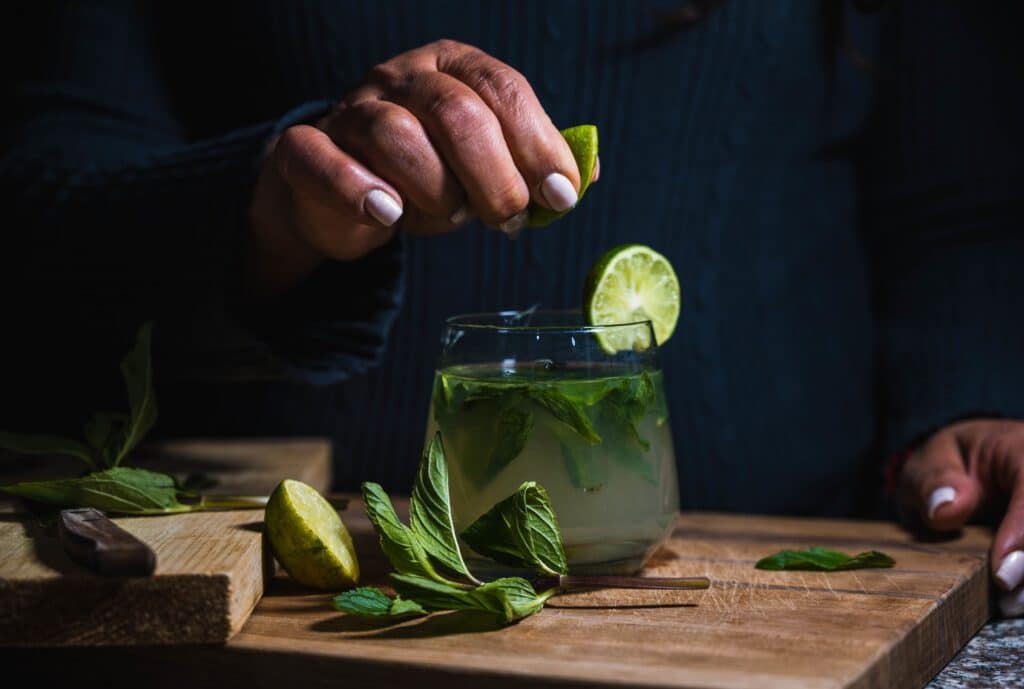
- Add mint leaves and lime juice to a tall glass. Muddle gently, just enough to bruise the mint and release the oils. Over-muddling makes the drink bitter.
- Add simple syrup and fill the glass with ice.
- Pour in the rum and stir briefly.
- Top with sparkling water and stir once from the bottom.
- Garnish with a mint sprig and a lime wheel.
What’s in a margarita
The margarita’s exact origin is disputed. The most widely cited story places it in Mexico in the late 1930s or early 1940s, with a Tijuana bartender named Carlos Herrera credited for creating it for a guest who was allergic to most spirits but could drink tequila. Whatever the real story, by the 1950s the margarita was already the most ordered tequila cocktail in the United States, a position it has never relinquished.
| Ingredient | Quantity |
|---|---|
| Tequila (blanco or reposado) | 60 ml |
| Fresh lime juice | 30 ml |
| Triple sec or Cointreau | 30 ml |
| Salt | For the rim |
| Garnish | Lime wedge |
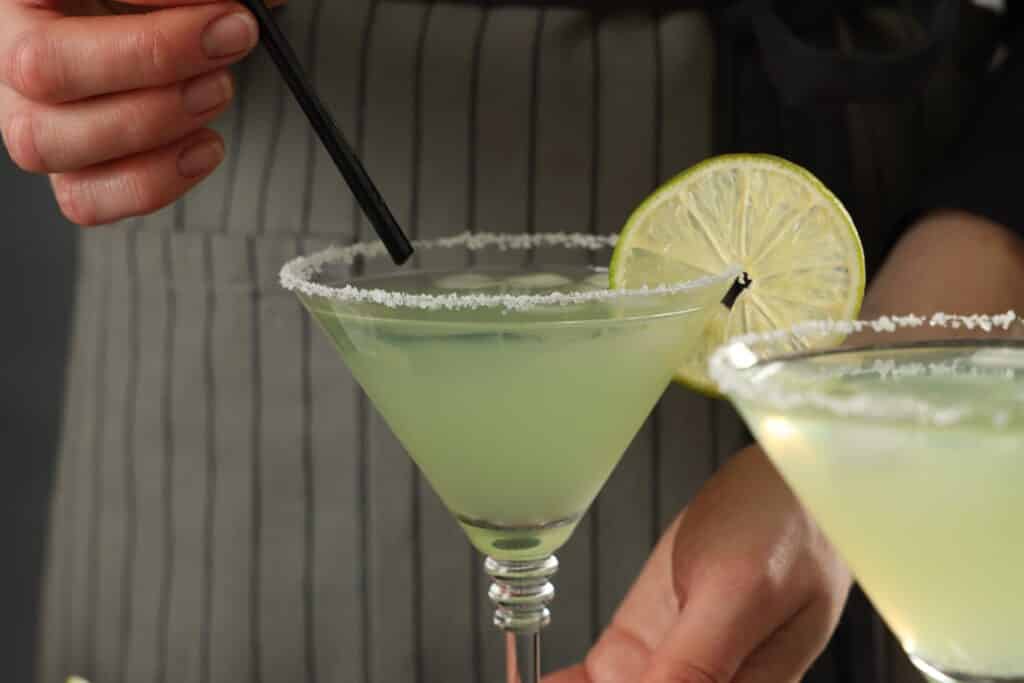
- Run a lime wedge around the rim of the glass and dip it in salt.
- Combine tequila, lime juice, and triple sec in a shaker with ice.
- Shake hard for 10-15 seconds.
- Strain into the prepared glass over fresh ice, or serve up in a chilled coupe.
- Garnish with a lime wedge.
One note on tequila: blanco tequila gives a cleaner, more citrus-forward margarita. Reposado adds vanilla and oak complexity from barrel aging, which makes for a richer, slightly warmer drink. Both work; the choice depends on how spirit-forward you want the result.
Flavor profile: how they actually taste different
The mojito is refreshing, light, and herbal. The mint is the dominant note, with lime providing acidity and the sparkling water adding lift. At around 10-12% ABV (because of the soda dilution), it’s one of the least intense classic cocktails, which makes it easy to drink over a long period without fatigue. The sweetness is present but restrained.
The margarita is more assertive. Tequila has a distinctive earthy, agave character that rum doesn’t have, and the orange liqueur adds a citrus sweetness that reinforces the lime rather than softening it. At 25-28% ABV, it’s a proper spirit-forward cocktail. The salt rim isn’t decorative; it suppresses bitterness and enhances the perception of sweetness in the drink, which is why a margarita without salt tastes flatter than one with it.
Which one to choose depending on the occasion
The choice between mojito and margarita is largely a question of context. Here’s how we think about it when building an event menu:
| Occasion | Better pick | Why |
|---|---|---|
| Summer outdoor party | Mojito | Lower ABV, more refreshing, easier to drink in the heat |
| Corporate cocktail hour | Margarita | Spirit-forward, sophisticated, works as a proper aperitif |
| Wedding reception | Both | Mojito for non-spirit drinkers, margarita for cocktail lovers |
| Late-night party | Mojito | Lower ABV means guests pace themselves naturally |
| Dinner party | Margarita | Works as an aperitif, complements food better |
| Rooftop event | Mojito | The mint and soda are ideal for warm, open-air settings |
If you’re unsure what the bar setup for your event would cost, our guide on how much it costs to hire a bartender breaks down rates, what’s included, and what to ask before you book.
Food pairings for each cocktail
The mojito pairs best with light, fresh dishes that don’t compete with the mint: ceviche, shrimp tacos, grilled fish, or anything with a citrus-forward marinade. Cuban food is the obvious cultural match — ropa vieja, black beans and rice, or plantains all work well. Avoid heavy, fatty dishes; the delicacy of the mojito gets overwhelmed easily.
The margarita is more versatile with food because tequila and salt handle bold flavors better than rum and mint. It’s the natural companion for Mexican food (tacos, enchiladas, guacamole), but also works with spicy Asian dishes, grilled meats, and anything with a strong umami component. The salt rim specifically is designed to pair with salty, fatty food.
Mojito and margarita at your event with Magic & Cocktails
Both cocktails are staples on our event menus in Los Angeles, and both reward attention to detail. A mojito with over-muddled mint and bottled lime juice is a different drink from one made with fresh mint barely bruised and fresh-squeezed lime. A margarita with cheap tequila and sour mix is not the same cocktail as one made with blanco tequila, Cointreau, and fresh citrus. The difference is execution, and execution is what a professional bar service provides.
If you’re planning an event and want a bar team that treats both cocktails with the same care, reach out to our bartending team in Los Angeles and we’ll build the menu around your guests and your event.