The terms mixologist and bartender get used interchangeably all the time, but they describe genuinely different things. A bartender is someone who tends a bar: takes orders, serves drinks efficiently, and keeps guests happy. A mixologist is someone who approaches cocktails as a craft discipline: studying flavor theory, developing original recipes, and designing drink programs from scratch. Both work behind a bar, but the focus of the job is different.
If you’re trying to decide who to hire for a private event, the distinction matters more than it might seem. Choosing the wrong profile for your guest count, event format, or bar program can affect everything from the quality of the drinks to the pace of service to the overall atmosphere of the night.
What is a bartender?
A bartender is the foundation of any bar operation. Their job is fundamentally guest-facing: taking orders, pouring drinks with speed and consistency, managing the bar during rushes, and making people feel welcome. A great bartender can work through 100 covers without losing composure, knows every classic recipe by memory, and understands how to read a room.
The title has no formal academic requirement. Bartenders learn through experience, often starting as barbacks or servers and moving up. What defines a skilled bartender is not academic knowledge but the combination of technical execution, speed, and genuine hospitality. As industry veteran Gary Regan put it: a mixologist will make you an amazing cocktail you remember that night; a bartender will make you an amazing night you remember forever.
What is a mixologist?
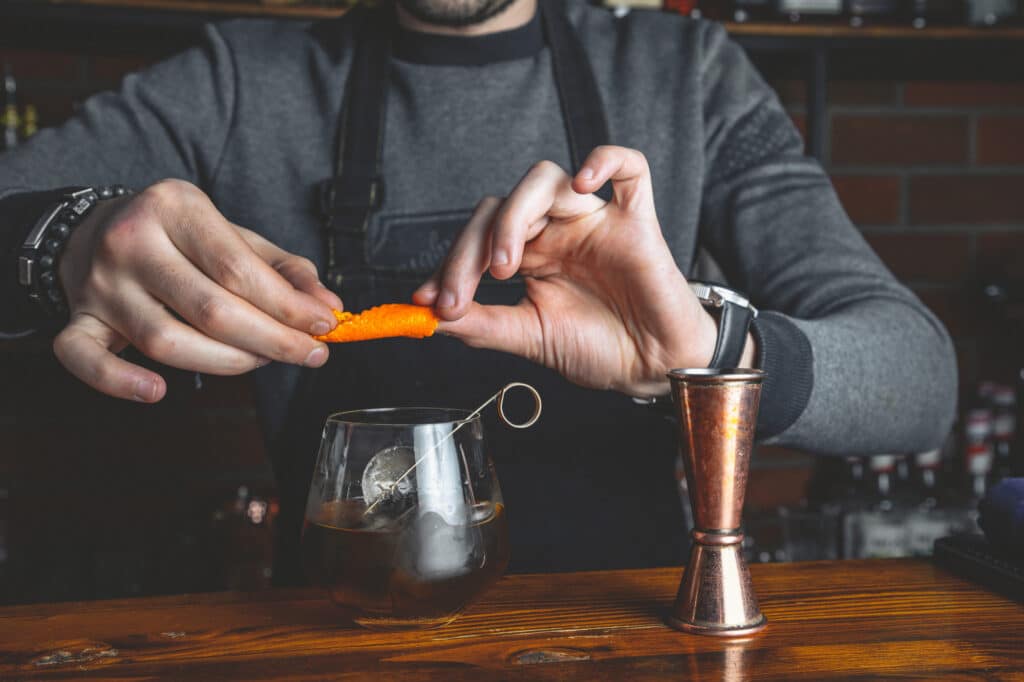
A mixologist is a bartender who has gone deep into the craft side of drinks. The term, which traces back to the 1850s, describes someone who studies the history of cocktails, understands the science behind flavor combinations, and creates original drink recipes rather than simply executing existing ones. Mixologists often work behind the scenes, developing menus, sourcing premium ingredients, and designing seasonal programs, rather than taking orders at a crowded bar.
In practice, the best mixologists are also capable bartenders, but their value is primarily in what they bring before and beyond service: the custom cocktail menu built around the event’s theme, the house-made syrups and infusions, the garnish system that makes every drink photo-ready. A mixologist knows not just what goes into a cocktail but why, and understands the logic behind every ingredient decision.
The real differences between a mixologist and a bartender
The distinction is not about hierarchy. It’s about focus. Here’s where the two roles genuinely diverge:
| Bartender | Mixologist | |
|---|---|---|
| Primary focus | Guest experience, speed, volume | Cocktail craft, recipe development |
| Works during service | Always | Often, but not always |
| Creates original recipes | Rarely | Consistently |
| Menu design | Executes existing menu | Designs and develops the menu |
| Background | Experience-based | Experience + study of cocktail history and technique |
| Best for events | High-volume, classic drinks | Custom menus, signature cocktails, themed bars |
One nuance worth noting: most professionals in the industry today are a blend of both. The craft cocktail movement of the past two decades has raised the baseline. Bartenders are more knowledgeable about spirits and technique than ever, and many mixologists take pride in their ability to work fast under pressure. The line between the two has blurred considerably.
A third profile nobody talks about: the entertainer bartender
The bartender vs mixologist debate almost always ignores a third category that exists and matters, especially for private events: the bartender who combines craft mixology with performance and entertainment.
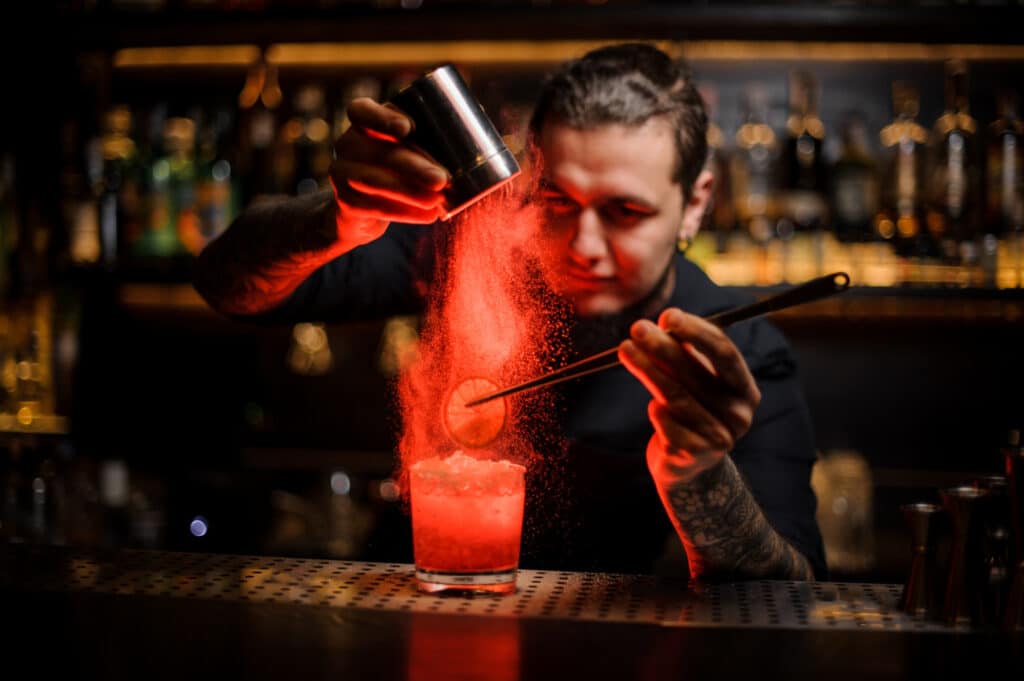
Flair bartenders bring a visual element to service, with bottle tricks, aerial pours, and theatrical sequences that turn the bar into a focal point of the event rather than just a functional station. Magic bartenders take this further, integrating close-up magic into the bar experience so that every guest interaction becomes a moment.
Magic & Cocktails is the only service of this kind operating in Southern California. Their bartenders bring craft cocktail technique, flair, and close-up magic together in a single service, which means the drinks are built on a serious mixology foundation while the bar itself functions as entertainment. For events where the guest experience is the priority and the bar needs to be a destination rather than just a queue, this third profile is worth knowing about.
Mixologist vs bartender: which one does your event actually need?
The honest answer depends on three things: your guest count, the complexity of the drink program, and what you want guests to feel when they arrive at the bar.
You need a skilled bartender if your priority is efficient, consistent service for a larger group. Beer, wine, a handful of classics, and a crowd that wants to drink and socialize without waiting. This is where a strong bartender excels. You don’t need a cocktail menu designed from scratch; you need someone who keeps the line moving and the atmosphere warm.
You need a mixologist if the drink program is part of the event’s identity. A wedding where the cocktail hour features three signature drinks built around the couple’s story. A brand activation where every cocktail is color-matched to the campaign. A birthday party where the bar menu is as curated as the catering. In these cases, the investment in a cocktail specialist pays off in the quality and coherence of what lands in your guests’ hands.
You need a magic bartender if you want the bar to be a moment in itself, the thing guests talk about, photograph, and remember. This works particularly well for corporate events, premieres, brand launches, and milestone celebrations where production value and social media moments are part of the brief.
How much does each bartender profile cost?
Understanding bartender services costs is key to comparing quotes accurately, because what’s included in each rate varies enormously. As a general benchmark for the Los Angeles market:
A standard bartender typically runs $35-60 per hour for labor only. A craft cocktail bartender or mixologist ranges from $60-90 per hour, often including custom menu development. A flair bartender sits in the $80-150 per hour range depending on the level of performance. Services like Magic & Cocktails work on custom quotes based on event specifics: guest count, duration, location, and the full scope of what’s included in the package.
Beyond the hourly rate, always confirm what the quote covers: setup and breakdown time, whether supplies and glassware are included, and whether the custom menu design is part of the fee or billed separately. A package that appears more expensive upfront often represents better value once you account for everything you’d otherwise source independently.
Looking to hire magic bartenders in Los Angeles?
Whether you need craft cocktails for a rooftop wedding, a fully themed bar program for a corporate mixer, or a bar experience that doubles as entertainment for a brand event, the profile you choose shapes the entire feel of the night.
If you’re in Southern California and want a service that combines the best of all three, mixology, flair, and entertainment, explore hire magic bartenders in Los Angeles from Magic & Cocktails, the only magic bartending service in the region, trusted by clients including Nike, Samsung, Sony, and Google.