Some cocktails have survived a century of changing trends, shifting tastes, and the relentless cycle of what’s new. The ones that made this list did it not because they were aggressively marketed or went viral on social media, but because the combination of ingredients, technique, and occasion hit something universal and kept hitting it decade after decade.
The most famous bartender drinks of all time include the Old Fashioned, the Negroni, the Margarita, the Espresso Martini, the Martini, the Mojito, the Manhattan, the Daiquiri, the Aperol Spritz, and the Whiskey Sour. What separates a famous drink from a forgotten one is not complexity. It’s balance, character, and the ability to fit a moment.
If you’re planning an event and want these classics served with the craft and presentation they deserve, the bartending services with unique cocktails from Magic & Cocktails bring each of these drinks to a level most standard bar services simply don’t reach.
What makes a cocktail truly iconic?
Three things. First, balance: the best classic cocktails are built on a ratio that works across spirit batches, ingredient variations, and bartender styles. A well-made Old Fashioned tastes like an Old Fashioned whether you’re in Tokyo or New Orleans. Second, character: iconic drinks have a personality. The Negroni is assertively bitter. The Mojito is unambiguously refreshing. The Martini is cold, dry, and deliberate. Third, adaptability: the drinks that survive are the ones that accept a modern riff without losing their identity. A spicy Margarita is still a Margarita. A smoked Old Fashioned is still an Old Fashioned. That structural integrity is what separates a classic from a trend.
The most famous bartender drinks of all time
Old Fashioned
The oldest cocktail on this list and arguably the most fundamental. The Old Fashioned dates to the early 1800s and is built on the simplest possible formula: spirit, sugar, bitters, and ice. Bourbon or rye whiskey, a sugar cube or simple syrup, Angostura bitters, and an orange peel. The drink became the template for the category.
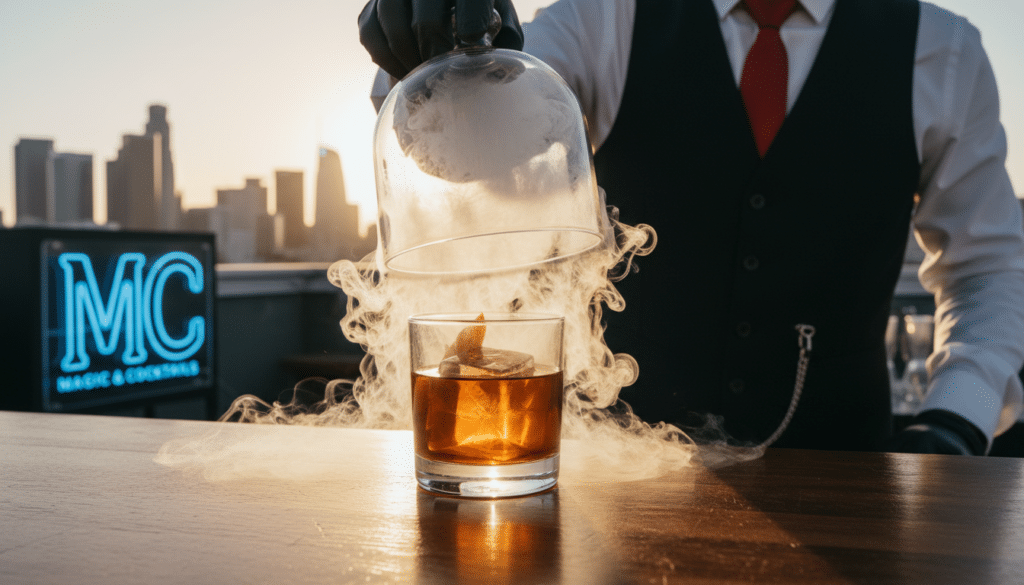
What keeps it relevant today is the same thing that made it relevant then: the quality of the base spirit is impossible to hide. A great Old Fashioned is a study in restraint. Bartenders who know what they’re doing serve it without shortcuts. The smoked variation, where a glass is cold-smoked before the pour, has become one of the most photo-forward presentations in modern bartending.
Negroni
Created in Florence in 1919 when Count Camillo Negroni asked his bartender to replace the soda water in his Americano with gin, the Negroni is equal parts gin, Campari, and sweet vermouth. It is deeply bitter, herbaceous, and ruby red. Most people who try it for the first time are surprised by how much they like it.
The Negroni is consistently ranked among the top five most-ordered cocktails at high-end bars globally, and it has become a particular favorite among bartenders who drink it at the end of a shift. That detail matters: when the people who make drinks professionally choose to drink something on their own time, it tells you something about the quality of the recipe.
Margarita
The Margarita is the most-ordered cocktail in the United States, a position it has held for years. Tequila, lime juice, and orange liqueur, typically served on the rocks with a salted rim. The combination of citrus, agave, and salt is one of those rare flavor pairings that feels almost physiologically satisfying.
Its durability comes from its versatility: frozen or on the rocks, classic or spicy, with mezcal instead of tequila for a smoky variation. The spicy Margarita has become one of the defining drinks of the past three years, and the category shows no signs of slowing. At a private event, a well-executed Margarita station with fresh lime juice and a quality blanco tequila consistently becomes one of the most-photographed elements of the bar.
Espresso Martini
The Espresso Martini was created in London in the 1980s by bartender Dick Bradsell, who reportedly received an unusual request from a customer: something that would wake her up and then get her high. The result was vodka, freshly brewed espresso, and coffee liqueur, shaken hard and strained into a coupe glass with three espresso beans as garnish.
The drink fell in and out of fashion for decades before exploding back into mainstream popularity after 2020, driven largely by social media. Espresso Martini consumption at bars increased from roughly 2% to 15% of orders between 2020 and 2024. It has become the defining cocktail of the post-pandemic social era: indulgent, caffeinated, and unmistakably photogenic when the foam sits perfectly on top.
Martini
Few drinks carry more cultural weight than the Martini. Gin, dry vermouth, and a garnish of either a lemon twist or a green olive. The drink has been refined, debated, and reinvented more than any other cocktail in history, and the argument over the correct ratio of gin to vermouth remains one of the most reliably heated discussions in any bar.
The Dirty Martini, with its addition of olive brine, led what critics called a savory cocktail wave in 2025. The result is a drink that works across a surprisingly wide range of occasions: as an arrival cocktail at a wedding reception, at a corporate event that wants to signal sophistication, or simply as a cold, clear, uncompromising way to start an evening.
Mojito
The Mojito has roots in Cuba that trace back centuries, beginning as a medicinal combination of mint, lime, and sugarcane juice before rum transformed it into one of the most beloved summer cocktails in the world. White rum, fresh lime juice, sugar, soda water, and muddled mint. The drink is deceptively simple and genuinely difficult to make well at scale.
The mint has to be fresh and properly handled: slapped, not shredded. The lime must be freshly squeezed. At high volume, shortcuts show immediately. A Mojito made with bottled lime juice and dried mint has nothing in common with the real thing except the name. At events where the Mojito is on the menu, the quality gap between a standard pour and a craft pour is more visible here than almost any other drink on the list.
Manhattan
The Manhattan predates Prohibition and is built on rye whiskey, sweet vermouth, and Angostura bitters, stirred over ice and served in a chilled coupe or rocks glass with a cherry. It is the cocktail most associated with a certain kind of composed, deliberate drinking.
Where the Old Fashioned is meditative, the Manhattan is social: it moves faster, it’s a touch sweeter, and it works across the full arc of an evening. At upscale private events and corporate dinners, the Manhattan consistently ranks among the top orders at a well-stocked bar. It rewards the bartender who stirs it long enough to get the dilution right.
Daiquiri
The Daiquiri is one of the most misunderstood drinks on this list, because the frozen strawberry version that dominated American chain restaurants in the 1980s and 90s bears almost no relation to the original Cuban recipe. The classic Daiquiri is white rum, fresh lime juice, and simple syrup, shaken and strained into a coupe glass. It is bracingly clean and precise.
Ernest Hemingway had his own version made at El Floridita in Havana: no sugar, grapefruit juice added, doubled rum. The Hemingway Daiquiri is a measure of how much range a three-ingredient recipe can contain when the proportions are moved with intention. Today the Daiquiri is experiencing a genuine critical revival, recognized by bartenders and serious cocktail drinkers as one of the most technically demanding drinks to execute correctly.
Aperol Spritz
The Aperol Spritz was invented in Venice in 1919 and has become one of the most widely consumed cocktails in the world. Prosecco, Aperol, and a splash of soda over ice, garnished with an orange slice. It is low in alcohol, bittersweet, and inherently festive.
Its rise in the United States over the past decade tracks almost perfectly with the growth of aperitivo culture and the normalization of day drinking as a social ritual. At outdoor events, afternoon receptions, and summer parties, the Aperol Spritz is one of the most consistently requested drinks. Its orange color is reliably photogenic and the format scales well for large groups.
Whiskey Sour
Whiskey, lemon juice, and simple syrup, with an optional egg white for the classic frothy version. The Whiskey Sour is one of the oldest sour cocktails on record, appearing in print as early as the 1860s. The template it established, spirit plus citrus plus sweetener, became the foundational structure of the entire sour family of cocktails.
The egg white version deserves particular attention: the foam it creates on top of the drink is both a textural and visual element that changes the entire experience of the cocktail. At events where the bartender takes the time to do a proper dry shake before the wet shake, the result consistently draws comments from guests who have never seen it done correctly before.
Classic cocktails vs signature cocktails: which belongs at your event?
The honest answer is both. A strong event bar program usually includes two or three signature cocktails designed specifically for the occasion alongside three or four classics executed with genuine craft. The signatures give guests something to discover. The classics give guests a reference point they trust.
Where this breaks down is when the classics are treated as afterthoughts: poured quickly from low-quality spirits into the wrong glass with no attention to garnish. A Negroni made with well gin tastes nothing like a Negroni made with a quality London dry. A Margarita poured from a mix without fresh lime is a different drink entirely. The classics carry the reputation of the bar, because they’re the benchmark against which every other drink is measured.
Bartending services with unique cocktails in Los Angeles
The drinks on this list have survived because they’re exceptional when they’re made well. The same recipe that produces a forgettable experience in one bar produces something guests talk about for weeks in another. The difference is technique, ingredients, and the bartender’s understanding of what the drink is actually supposed to feel like.
Magic & Cocktails brings exactly that level of craft to private events across Southern California. Whether the menu calls for a classic Negroni, a photo-forward Espresso Martini with a perfect foam top, or a custom signature built around the event’s theme, the bar experience is designed to match the occasion. Explore bartending services with unique cocktails from the only magic bartending service in Southern California, trusted by Nike, Samsung, Sony, and Google.