A daiquiri and a mojito are both Cuban white rum cocktails, but they split on three things: a mojito adds fresh mint and soda water and is served tall over ice, while a daiquiri is just rum, lime, and sugar, shaken hard and served up in a chilled coupe with no ice. Put simply, a mojito is a daiquiri with mint and fizz. The daiquiri is crisp and spirit-forward; the mojito is herbal, bubbly, and thirst-quenching.
That one-line answer covers the basics, but the two drinks behave very differently once you’re actually making them, drinking them, or serving them to a crowd. Below is the full breakdown: ingredients, technique, flavor, glassware, and which one to reach for depending on the moment.
Daiquiri vs mojito at a glance
Both drinks start from the same base of white rum and fresh lime, which is exactly why they get compared. The differences come down to two added ingredients (mint and soda) and one big technique choice (shaken and strained versus built over ice).
| Feature | Daiquiri | Mojito |
|---|---|---|
| Core ingredients | White rum, lime juice, sugar or simple syrup | White rum, lime, sugar, fresh mint, soda water |
| Technique | Shaken with ice and strained | Muddled and built in the glass |
| Served with ice | No, served up | Yes, over crushed or cubed ice |
| Glass | Coupe or cocktail glass | Highball or Collins glass |
| Flavor | Crisp, tart, spirit-forward | Herbal, fresh, effervescent |
| Strength | Stronger, undiluted by soda | Lighter, lengthened with soda |
What is a daiquiri?
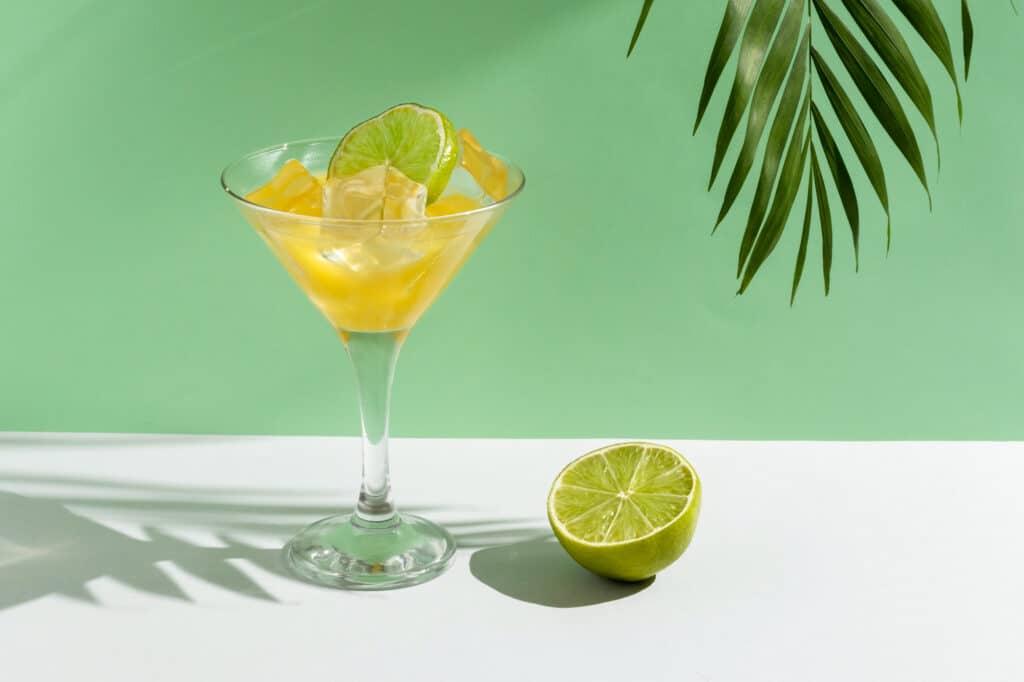
A classic daiquiri is a three-ingredient rum cocktail: white rum, fresh lime juice, and sugar or simple syrup, shaken hard with ice and strained into a chilled coupe. No mint, no soda, no blender. It’s served up, cold and undiluted, which puts the rum front and center.
Bartenders treat the daiquiri as a benchmark drink precisely because it’s so simple: with only three ingredients, there’s nowhere to hide a bad balance between sweet and sour, or a cheap, harsh rum. It’s worth clearing up a common mix-up too: the frozen, fluorescent strawberry daiquiri from a slushie machine is a distant relative, not the original. The classic is clear, crisp, and served straight up.
What is a mojito?
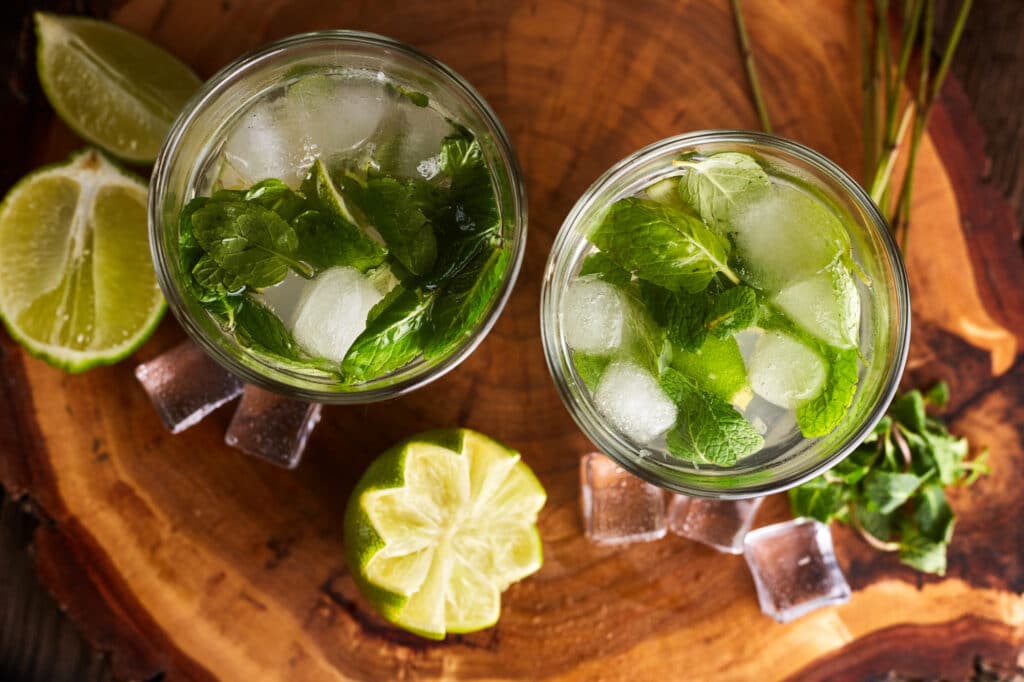
A mojito takes that same rum-lime-sugar base, adds fresh mint and soda water, and serves it long over ice. The mint is gently muddled (pressed, not shredded) with the lime and sugar to release its oils, then rum and ice go in and soda water tops it off. The result is lighter, fizzier, and more refreshing than a daiquiri, built for slow sipping in the heat.
Because it’s lengthened with soda, a mojito is lower in alcohol by volume than a daiquiri of the same rum pour, which is part of why it reads as such an easy, sessionable summer drink. The mint also makes it the more aromatic of the two: you smell it before you taste it.
The key difference: mint, soda, and technique
If you strip both drinks down, the daiquiri is the parent and the mojito is the variation. Take a daiquiri, add fresh mint and top with soda water, serve it over ice instead of straining it up, and you’ve essentially built a mojito. That single relationship explains every difference in taste and texture between them.
Technique is where they diverge most in practice. A daiquiri is shaken and strained, so it’s cold, silky, and consistent every time. A mojito is built in the glass and depends on muddling the mint correctly, over-muddle and it turns bitter and grassy, under-muddle and you lose the aroma. That’s why a mojito is fussier to make well, especially at volume.
Daiquiri or mojito: which should you order?
Order a daiquiri when you want something crisp, strong, and rum-forward, a proper cocktail-hour drink you sip slowly. Order a mojito when you want something long, cold, and refreshing you can drink on a hot afternoon without it tiring you out. Neither is “better”; they solve different cravings.
A quick guide: pick the daiquiri if you like your drinks tart and spirit-driven (fans of a margarita or a gimlet usually land here), and pick the mojito if you want herbal, fizzy, and easy-drinking. If you’re the kind of drinker who enjoys tasting the quality of the rum itself, the daiquiri shows it off; the mojito’s mint and soda soften and stretch it. For a deeper look at how the mojito stacks up against another muddled, lime-heavy classic, our breakdown of the differences between a caipirinha and a mojito covers a comparison people mix up even more often.
Do bartenders dislike making mojitos?
Some do, and it comes down to time, not difficulty. A daiquiri takes seconds: measure, shake, strain. A mojito needs careful muddling, fresh mint on hand, and more steps per glass, which slows down a busy bar and is easy to rush. A rushed mojito is where the drink’s bad reputation comes from: too much sugar, bruised mint, warm soda.
At an event, this matters more than at home. Serving mojitos to 100 guests means either batching the base ahead of time or accepting slower service, whereas daiquiris and other shaken drinks move faster through a line. A professional bar team plans for this: pre-portioning mint, batching the rum-lime-sugar base, and finishing each drink to order so quality holds up across a long night.
Can you make either one non-alcoholic?
Yes, both translate cleanly to zero-proof versions. A virgin mojito keeps the mint, lime, sugar, and soda and simply drops the rum, and it barely loses anything because so much of the drink’s character is the mint and fizz. A virgin daiquiri is trickier, since the rum is the whole point; it usually needs a non-alcoholic rum alternative to taste like more than sweet limeade. For a crowd, the mojito is the easier of the two to offer in both alcoholic and alcohol-free versions from the same setup.
Serving daiquiris and mojitos at your event
Both drinks are event favorites for a reason: they’re fresh, familiar, and crowd-pleasing, and they cover two different guests, the one who wants something strong and the one who wants something light and refreshing. The trick is execution. Fresh-squeezed lime, real mint, quality white rum, and someone who knows how to muddle without bruising are what separate a memorable drink from a sugary letdown.
That’s the difference a professional makes, and it’s what a mobile cocktail bar for events in Los Angeles like Magic & Cocktails is built for. The team designs custom menus around your event and mixes each drink to order, whether that’s a crisp classic daiquiri, a proper mint-forward mojito, or a signature twist on either. Tell them your guest count, date, and the vibe you’re after, and get a bar built to serve both the daiquiri drinker and the mojito drinker without cutting corners on either.